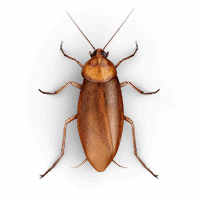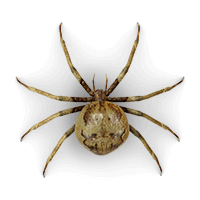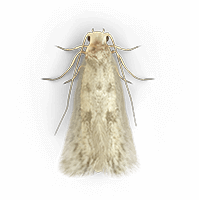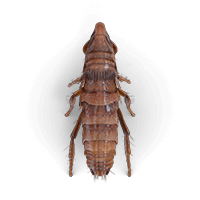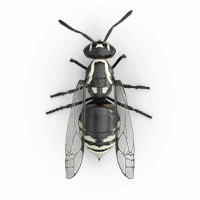


American Roach

Actual size: up to 1.5 in.


Brown Banded Roach

Actual size: 0.5 in.


German Roach

Actual size: 0.5 in.


Oriental Roach

Actual size: up to 1.2 in. |
|
Roaches at a Glance
Roaches are a common and persistent problem in many households. They are repulsive to look at. They are messy. And they produce disgusting odors. Roaches can also introduce and spread harmful bacteria, such as Salmonella, and they can be a major source of allergies and asthma.
Roaches have a broad, flattened body shape, six legs (which are adapted for running), and relatively long antennae (or "feelers"). Their normal behavior in and around homes is to hide in cracks, crevices, or other protected areas that are suitably warm and moist during the daytime hours. After dark, roaches come out of hiding to mate and forage for food and water. To effectively control roaches, knowledge of their hiding and harboring behavior is very important.
A Roach's Feeding and Foraging Behavior
Roaches spend 75 percent to 80 percent of their time resting in cracks and crevices, but when they are active they spend most of their time searching for or eating food.
Roaches feed on anything organic. With a nearby food and water source, they survive for long periods of time without ever leaving a particular area. Small roaches (nymphs) often eat each other's droppings. Adult roaches eat fragments of egg cases and body partsand their young as they hatch. They readily find adequate food in the "fallout" of crumbs, spills, and poorly contained food or beverage items people have in their homes. Foods that have high levels of sugar, starch, or grease seem to be preferred, but roaches feed on nearly anything that can be chewed.
Roaches forage when they are deprived of food. Therefore, sanitation is very important in any roach-control programespecially in a baiting program. It is important to remember that roaches do not detect food from great distances. Studies of their foraging patterns indicate they just eventually run into food or bait. This is why bait placement near roach habitats is so important. This also proves the need for multiple bait stations.
Disease and Damage From Roaches
Roaches may carry numerous disease-causing bacteria and other organisms. As roaches crawl and defecate on food, dishes, and utensils, these items can become contaminated with pathogens and tainted with the roach's excrement and saliva. The most commonly carried bacterium is Salmonella, which can cause food poisoning, diarrhea, and other gastro-intestinal disorders.
Roaches are a main source of allergies and allergic asthma in children. Allergic reactions to roaches can include skin irritation, watery eyes, sneezing, and asthma. Death, a very rare occurrence, is due to acute, severe asthma attacks brought on by sudden exposure, of severely allergic individuals, to substantial doses of allergens. Roach allergens can be contacted while doing house cleaning in areas where roach skins and excrement are abundant.
Cleaning Up!
Insecticide products are the most efficient and widely used tools for controlling roaches. They should not be a cure-all, or a crutch, for situations where poor sanitation and clutter are largely responsible for an ongoing infestation. Insecticide products should be used in conjunction with necessary sanitation and housekeeping procedures.
Follow These Tips for Effective Roach Control:

 |
Eliminate exposed food and moisture.
 |
 |
Take the garbage out frequently.
 |
 |
Wash and dry dishes as soon as possible.
 |
 |
Toss out old boxes and newspapers.
 |
 |
Keep kitchen floors, counters, and cupboards clean.
 |
 |
Clean and vacuum regularly behind ovens, microwaves, toasters, and refrigerators.
 |
 |
Wipe up food spills on and around appliances.
 |
 |
Restrict kids from eating outside of the kitchen.
 |
 |
Store food items in closed, plastic containers. |
In addition to sanitation, roach control also includes regular maintenance:

 |
Seal any foundation and exterior cracks to reduce roach access to your home.
 |
 |
Keep plumbing in good repair.
 |
 |
Keep the basement dry.
 |
 |
Run central air.
 |
 |
Use traps to locate and monitor pest population. |
Taking such steps won't always be possible, particularly in the case of multiple-dwelling buildings. However, when you do follow these tips, roach problems will be less severe and easier to solve.
|